
1. INTRODUCTION
Soccer is an intermittent team sport characterized by frequent and unpredictable fluctuations in movement intensity and motor demands (1). Short-distance sprints, rapid accelerations and decelerations, directional changes, kicking, jumping, and tackling are integral components of match play and impose substantial physical and technical demands on players (2). These actions are decisive for goal scoring, winning individual duels, and ultimately determining match outcomes (3). In modern soccer, the ability to repeatedly generate high levels of force and explosive power is considered essential for optimal performance (4). Furthermore, the continuous evolution of physical and tactical demands at the elite level has increased the need for efficient and evidence-based training methodologies aimed at enhancing players’ physical and functional capacities.
Functional training has gained considerable popularity in recent years (4,5). It is commonly defined as a systematic exercise approach designed to replicate sport-specific movement patterns relevant to the target activity. The primary objective of functional training is to develop and maintain an optimal interaction between mobility, stability, strength, and agility, thereby enabling athletes to execute fundamental movement patterns with greater accuracy and efficiency (6).
Functional Football Performance (FFP) is a strength and conditioning concept aimed at improving soccer-specific performance through functional strategies and exercises derived from the principles of applied functional science, as developed by the Gray Institute. To the authors’ knowledge, no previous studies have examined the application of applied functional science principles for enhancing physical performance in soccer. Therefore, the purpose of the present study was to quantify the effects of a four-week FFP-based training intervention on physical performance measures in Norwegian sub-elite soccer players.
It was hypothesized that the FFP intervention would lead to improvements in sprint performance, change-of-direction ability, and vertical jump performance.
2. METHODS
2.0 Experimental Approach to the Problem
This study investigated the effects of a four-week functional strength and power training program on selected physical performance variables in soccer players. Performance outcomes included vertical jump height (countermovement jump), change-of-direction ability (S180° test), and linear sprint performance over 10 m and 20 m. These tests were used to assess the effects of the intervention period.
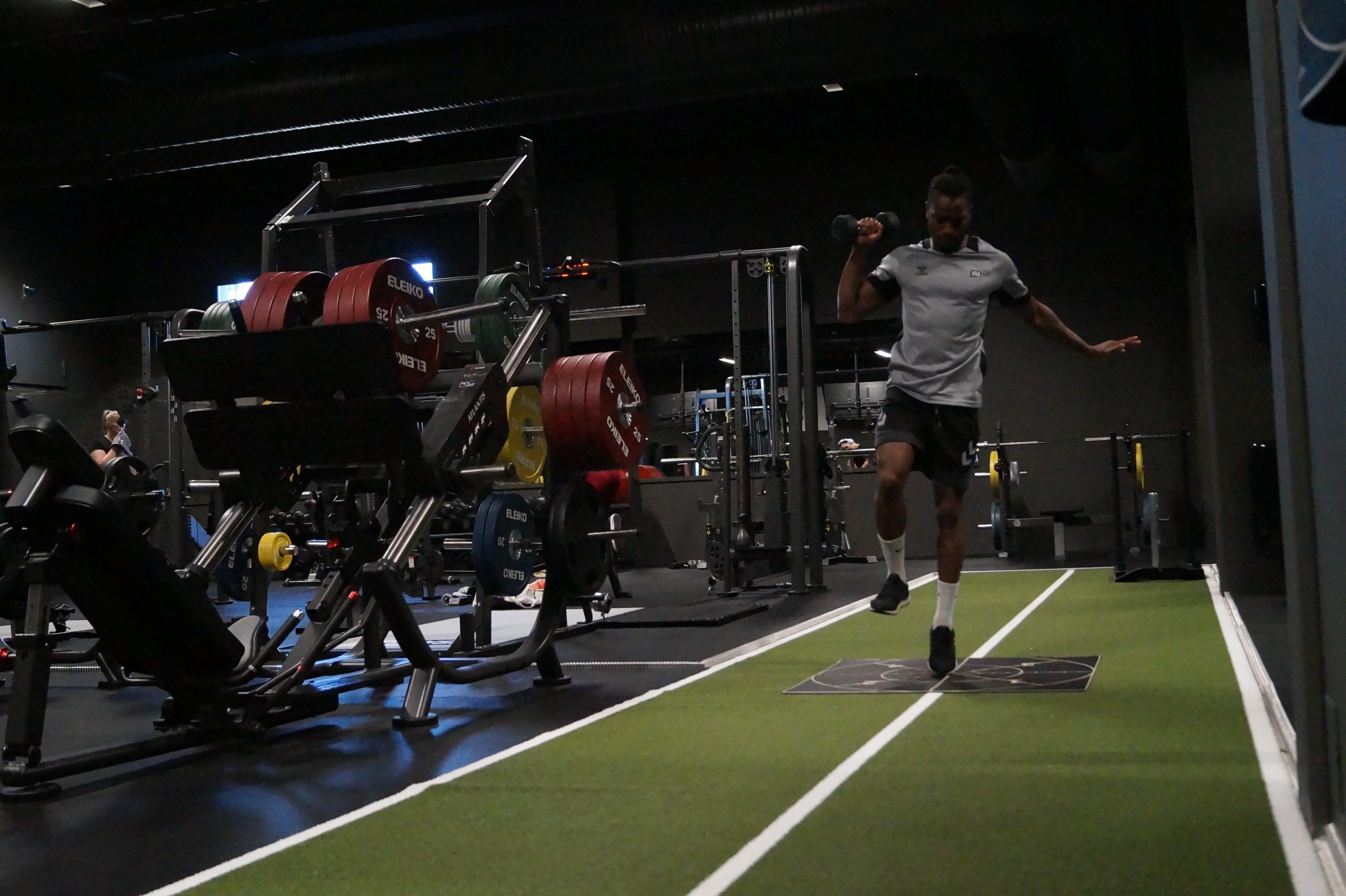
A quantitative controlled trial design was employed. Fourteen players were initially recruited and completed their regular soccer training, consisting of three training sessions per week and one competitive match. In addition, two supplementary training sessions per week (approximately 70 minutes each) were introduced. These sessions comprised a combination of functional power training (multidirectional plyometric and sprint exercises) and functional strength training (multidirectional resistance exercises).
All intervention sessions were supervised by the primary investigator, a certified strength and conditioning coach. Participants were familiarized with the testing procedures one month prior to pretesting, as these tests were already integrated into the ongoing preseason physical assessments. All testing was conducted by the same investigator, and participants were tested in the same order during both testing sessions.
2.1 Subjects
Sub-elite male soccer players were recruited from a local club in Northern Trøndelag, Norway. All participants competed in the Norwegian 3rd Division and were considered moderately trained, engaging in three soccer training sessions per week and one official 11-a-side match on a regulation-sized pitch (approximately 50 × 100 m). Matches lasted 90 minutes (two 45-minute halves with a 15-minute halftime interval).
Typical soccer training sessions consisted of a 10-minute warm-up, approximately 30 minutes of technical drills, 45 minutes of tactical and game-related activities, and a 5-minute cooldown. All participants had previous experience with traditional strength and power training.
Initially, 14 players were included in the statistical analysis (age: 21.28 ± 3.91 years; height: 180.30 ± 9.12 cm; body mass: 77.98 ± 6.73 kg; mean ± SD). Exclusion criteria included injury, illness, rehabilitation preventing full participation, or insufficient attendance during the intervention period. Due to illness and limited training participation, only four players met the inclusion criteria at the end of the intervention and were included in the final statistical analysis (age: 23.00 ± 4.08 years; height: 177.07 ± 6.49 cm; body mass: 78.22 ± 2.41 kg).
2.2 Procedures
Due to the preseason training phase, participants engaged in physically demanding training sessions in the days preceding both testing occasions. None of the players reported injuries at the time of pretesting, and all demonstrated the ability to perform high-intensity soccer activities, as assessed using the Tegner Activity Scale (7).
All pre- and post-tests were conducted on the same weekday. However, due to logistical constraints and preseason scheduling, warm-up procedures differed between testing sessions. During pretesting, participants completed the performance tests prior to a strength training session, whereas during post-testing, assessments were performed following a strength and power workout. Participants were instructed to wear indoor athletic footwear for testing.
The testing sequence was standardized as follows: 10 m and 20 m sprint, S180° change-of-direction test, and maximal vertical jump.
10 m and 20 m Sprint
Participants began from a stationary standing position with their feet positioned just behind the starting line, 0.5 m from the first photocell (Brower TCi Timing System, Draper, UT, USA). Timing commenced when the first photocell was crossed. Additional photocells were positioned at 10 m and 20 m at a height of 0.32 m. Each participant completed two trials with a one-minute recovery period between trials. The fastest 20 m sprint time and its corresponding 10 m split were used for analysis.
S180° Change-of-Direction Test
The test setup followed the protocol described by Sporis et al. (8). Participants sprinted through a predefined course (AB 9 m, BC 3 m, CD 6 m, DB 3 m, BE 9 m), performing 180° directional changes around cones placed at points B, C, D, and E (cone height: 0.39 m). The test required two 180° turns, one to each side. Two trials were completed with one-minute rest intervals, and the fastest time was used for analysis.
Maximal Vertical Jump
Participants performed countermovement jumps while wearing athletic footwear on a portable contact mat system (Just Jump System, M-F Athletic Company, Cranston, RI, USA). Jump height was calculated from flight time. Two trials were completed with one-minute rest intervals, and the highest jump was included in the analysis.
2.3 Statistical Analyses
Statistical analyses were conducted using SPSS version 28.0.1.1 (IBM, Ehningen, Germany). Descriptive statistics (mean ± SD) were calculated for all variables. Normality of data distribution was assessed using the Shapiro–Wilk test.
Paired-sample t-tests were applied to evaluate pre- to post-intervention differences for the 10 m sprint, S180° change-of-direction test, and vertical jump performance. Since the 20 m sprint data were not normally distributed, a Wilcoxon signed-rank test was used for this variable. Statistical significance was set at p < 0.05.
3. RESULTS
Following the four-week intervention period, neither the paired-sample t-tests nor the Wilcoxon signed-rank test revealed significant improvements in performance. No statistically significant differences were observed for the 10 m sprint (p = 0.096), 20 m sprint (p = 0.273), S180° change-of-direction test (p = 0.551), or vertical jump performance (p = 0.078).
4. DISCUSSION
The purpose of this study was to examine the effects of a four-week functional strength and power training program on physical performance in Norwegian sub-elite soccer players. The results demonstrated no significant improvements in linear sprint performance, change-of-direction ability, or vertical jump height.
These findings were contrary to the study’s initial hypothesis. Previous research has consistently shown that sprinting and jumping performance are highly dependent on the ability to generate muscular power (9). In particular, strength and neuromuscular coordination of the ankle, knee, and hip joints are critical for achieving high force production during acceleration and vertical propulsion (10,11). Strong associations between maximal lower-body strength, sprint speed, and jump performance have been reported in elite Norwegian soccer players (12). Furthermore, combined strength and plyometric training interventions lasting six weeks or longer have been shown to significantly improve sprint and jump performance in adult soccer players (13).
Several limitations may explain the lack of significant findings in the present study. The most critical limitation was the small final sample size, which substantially reduced statistical power. Additionally, compliance was compromised, as several players were unable to attend all training sessions due to competitive commitments and illness. Differences in pre- and post-test warm-up conditions and testing fatigue further limit the reliability of the results. Notably, post-testing was conducted after a demanding strength and power session, which may have negatively influenced performance outcomes.
5. CONCLUSION
Due to limited sample size, low compliance, and methodological inconsistencies between pre- and post-testing procedures, definitive conclusions regarding the effectiveness of functional strength and power training in improving physical performance among Norwegian sub-elite soccer players cannot be drawn. Future studies should employ larger sample sizes, standardized testing conditions, and longer intervention periods to more accurately assess the impact of functional training approaches on soccer-specific performance.
6. ACKNOWLEDGEMENTS
The author would like to thank all participants for their commitment and effort throughout the study. The author declares no conflicts of interest. The research was conducted in accordance with the principles outlined in the Danish Code of Conduct for Research Integrity.
7. REFERENCES
- Bolaños, M. C., Cossio-Bolaños, M. A., Gómez-Campos, R., Andruske, C. L., & Urra-Albornoz, C. (2021). A systematic review of intervention programs that produced changes in speed and explosive strength in youth footballers. European Journal of Translational Myology, 31(3), 1–8.
- Arnason, A., Sigurdsson, S. B., Gudmundsson, A., Holme, I., Engebretsen, L., & Bahr, R. (2004). Physical fitness, injuries, and team performance in soccer. Medicine & Science in Sports & Exercise, 36(2), 278–285.
- Reilly, T. (2007). The science of training – Soccer. London, UK: Routledge, pp. 19–32.
- Keiner, M., Rahlf, A. L., Young, W. B., & Hartmann, H. (2022). Effects of 10 months of speed, functional, and traditional strength training on strength, linear sprint, change-of-direction, and jump performance in trained adolescent soccer players. Journal of Strength and Conditioning Research, 36(8), 2236–2246.
- Lajoso-Silva, N., Rocha-Rodrigues, S., Clemente, F. M., & Santos, R. (2021). Functional training in Portuguese firefighters: Effects on physical fitness. Journal of Occupational and Environmental Medicine, 63(4), 169–176.
- Marques, V. B., Medeiros, T. M., de Souza Stigger, F., Nakamura, F. Y., & Baroni, B. M. (2017). The Functional Movement Screen™ in elite young soccer players aged 14–20 years: Composite score, individual test scores, and asymmetries. International Journal of Sports Physical Therapy, 12(6), 977–985.
- Hambly, K., & Griva, K. (2010). The use of the Tegner Activity Scale for articular cartilage repair of the knee: A systematic review. Knee Surgery, Sports Traumatology, Arthroscopy, 19(4), 604–614.
- Sporiš, G., Jukić, I., Milanović, L., & Vučetić, V. (2010). Reliability and factorial validity of agility tests for soccer players. Journal of Strength and Conditioning Research, 24(3), 679–686.
- Wong, P. L., Chamari, K., & Wisløff, U. (2010). Effects of 12-week on-field combined strength and power training on physical performance among U-14 young soccer players. Journal of Strength and Conditioning Research, 24(3), 644–652.
- Fatouros, I. G., Jamurtas, A. Z., Leontsini, D., Taxildaris, K., Aggelousis, N., Kostopoulos, N., & Buckenmeyer, P. (2000). Evaluation of plyometric exercise training, weight training, and their combination on vertical jumping performance and leg strength. Journal of Strength and Conditioning Research, 14(4), 470–476.
- Sáez de Villarreal, E., Suarez-Arrones, L., Requena, B., Haff, G. G., & Ferrete, C. (2015). Effects of plyometric and sprint training on physical and technical skill performance in adolescent soccer players. Journal of Strength and Conditioning Research, 29(7), 1894–1903.
- Wisløff, U., Castagna, C., Helgerud, J., Jones, R., & Hoff, J. (2004). Strong correlation of maximal squat strength with sprint performance and vertical jump height in elite soccer players. British Journal of Sports Medicine, 38(3), 285–288.
- Rodríguez-Rosell, D., Mora-Custodio, R., Franco-Márquez, F., Yáñez-García, J. M., & González-Badillo, J. J. (2017). Effects of light-load maximal lifting velocity weight training vs. combined weight training and plyometrics on sprint, vertical jump, and strength performance in adult soccer players. Journal of Science and Medicine in Sport, 20(7), 695–699.