
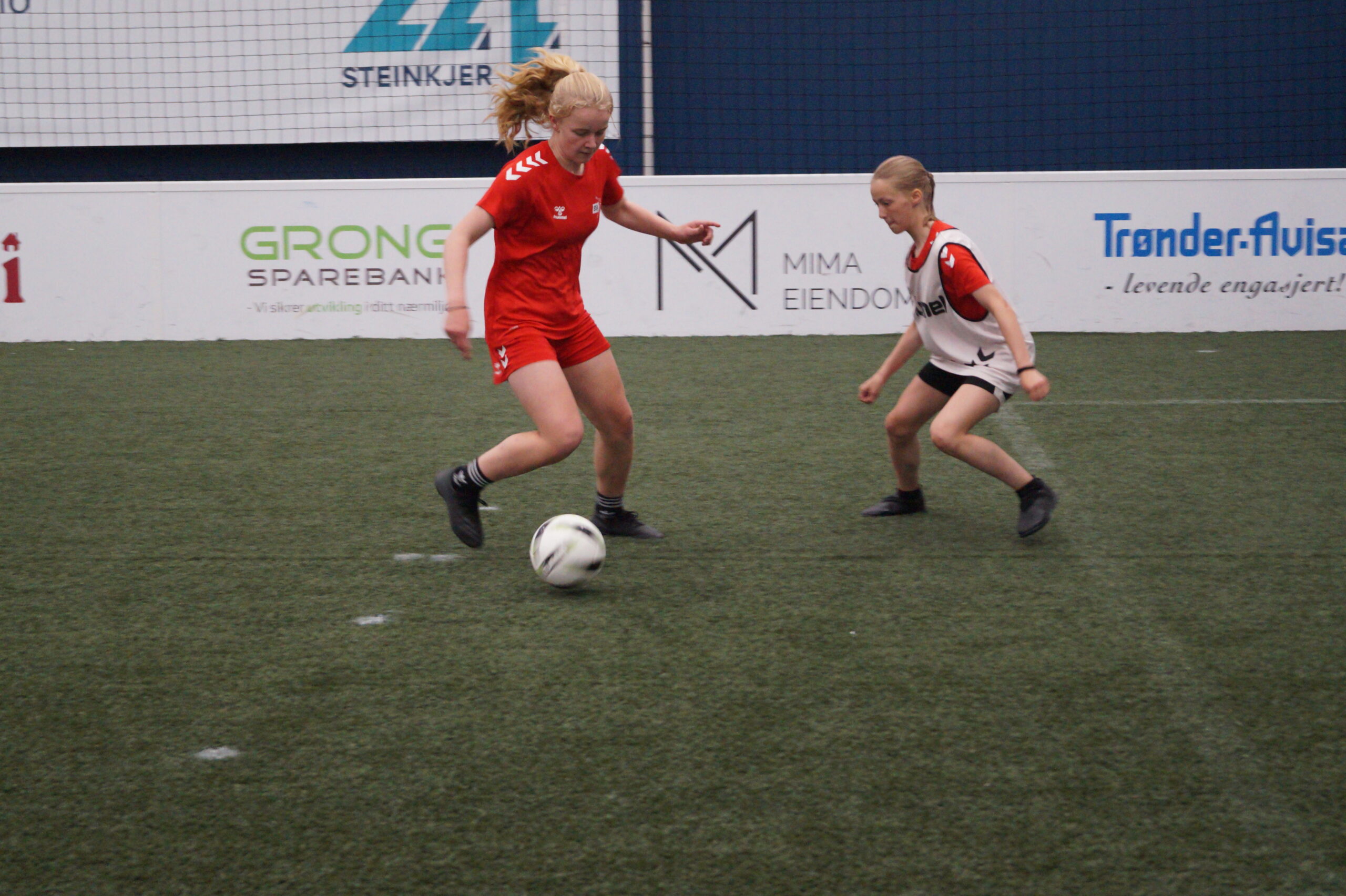
The aim of this project was to examine the effects of a comprehensive warm-up system designed to improve technical abilities in youth football players.
Abstract
Objective: To examine the effects of a comprehensive warm-up system designed to improve technical abilities in youth football players.
Design: Cluster-randomized controlled trial, with clubs serving as the unit of randomization.
Setting: Five football clubs from the Region of Nordjylland (15 clusters in the intervention group and 15 in the control group) followed over one league season (eight months).
Participants: Eighty-two youth football players aged 7–13 years (55 players in the intervention group: age 10.5 ± 1.5 years; 27 players in the control group: age 10.9 ± 1.4 years).
Intervention: The intervention group implemented Functional Football Performance (FFP) training, a comprehensive warm-up system aimed at improving awareness and neuromuscular control through sport-specific, dynamic exercises developed from biomechanical analysis of football-specific skills.
Main Outcome Measures: Quantitative pre- and post-test data obtained using a standardized test battery consisting of four tests: football agility with ball, football agility without ball, 40 m agility sprint, and basic skill performance.
Results: The control group demonstrated a significant improvement of 2.8% in the 40 m agility sprint test, with no significant changes observed in the remaining tests. In contrast, the intervention group showed significant improvements across all four tests: 7.2% in basic skill performance, 5.2% in the 40 m agility sprint, 2.0% in football agility without ball, and 10.4% in football agility with ball.
Discussion: The findings highlight the importance of implementing structured and sport-specific warm-up programs to enhance movement skill performance (Magill, 2003). Notably, improvements in the 40 m agility sprint test were observed in both groups, emphasizing the role of physical capacity development. Similar findings have been reported in a German study, which attributed sprint performance improvements to increased body strength (Sander et al., 2012).
Conclusion: Participation in the structured warm-up program over an eight-month season resulted in significant improvements in technical abilities among youth football players in the intervention group. To optimize daily training practices, the use of the Functional Football Performance warm-up system, as implemented in this study, is recommended over unstructured warm-up routines.